Aircraft Maintenance
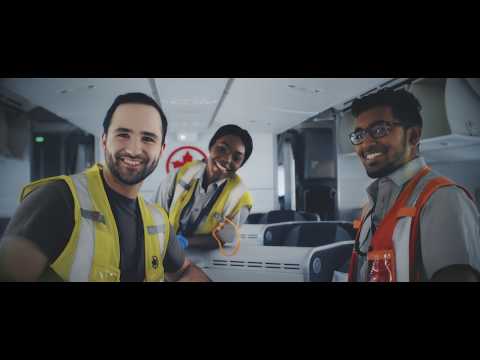
Air Canada Maintenance and Air Canada Technical Services (ACTS) are responsible for the airworthiness of all our aircraft. Maintenance makes the final decision as to whether an aircraft is ready for flight, a decision governed by the principle of “Safety First”. As such, maintenance is involved in almost all aspects of the airline, from where we fly, to how often we fly and when we fly.

Air Canada maintenance teams are required to complete highly technical work, including maintaining and repairing the aircraft, operating aircraft systems and engines, as well as taxiing the aircraft. Ask a pilot what he thinks about maintenance, and you will learn that this may very well be the most important department within an airline.

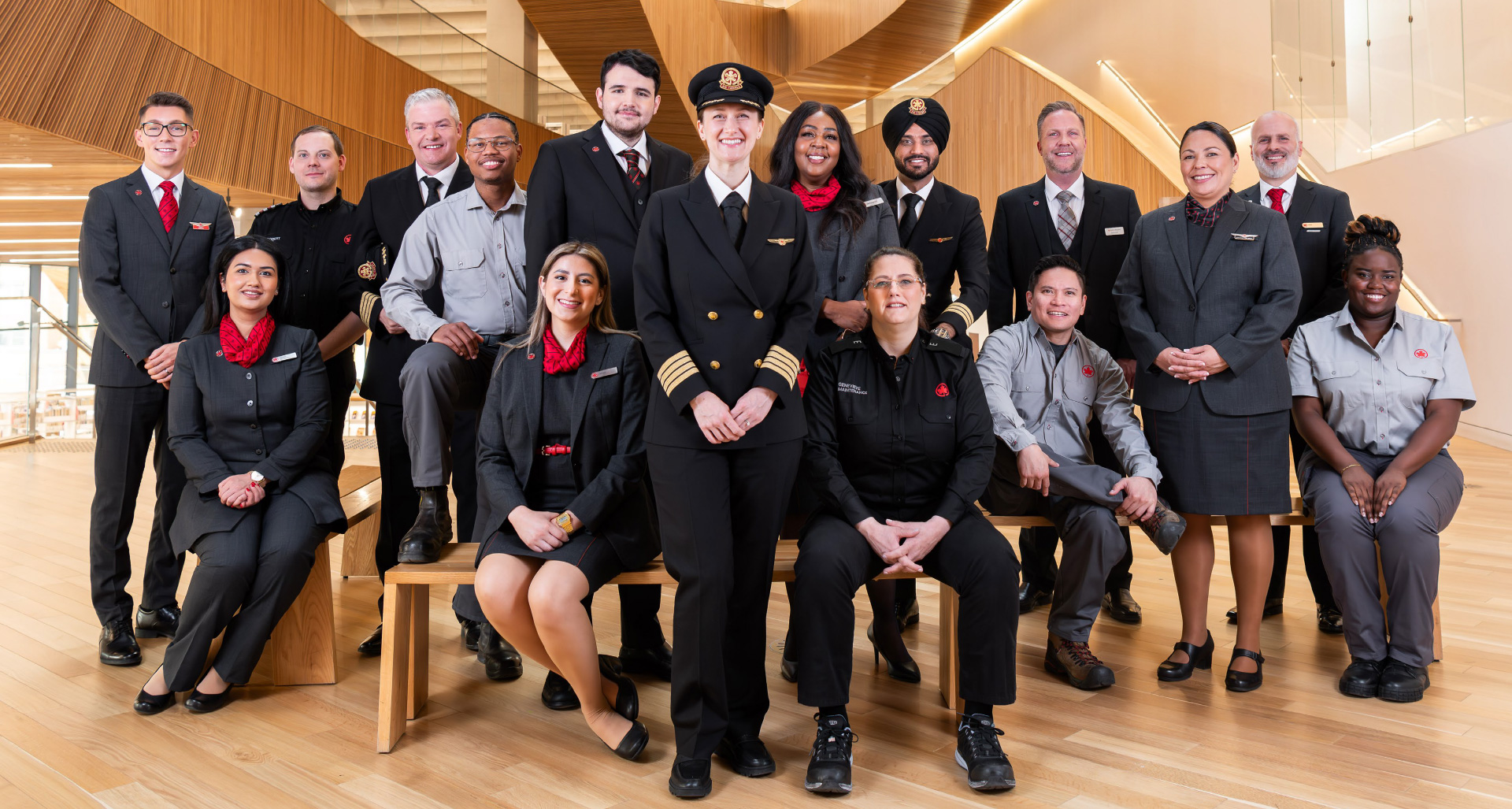
A variety of skilled trades are involved in the maintenance of aircraft at Air Canada and ACTS

Previous experience is required for employment as a technician / mechanic. However, from time to time openings are available to candidates with little or no technical experience in aircraft maintenance. In such cases applicants are placed in the "junior" classification. These employees can progress from the "junior" to the aircraft technician / mechanic classification.

The educational requirement for “junior” is High School completion. However preference is given to candidates who, in addition, have completed a technical course at a recognized institution, such as a Transport Canada approved school. Certain trades (*) require a diploma from a Transport Canada approved school.

A variety of skilled trades are involved in the maintenance of an aircraft, engine and component at Air Canada and ACTS.

Aircraft Maintenance Technician - Technicians are responsible for scheduled maintenance, defect rectification, and troubleshooting Company and customer aircraft. Working in the hangar and on the ramp, technicians are involved in repairing such things as flight control systems, landing gear, fuel systems, hydraulic systems, etc. Candidates hired as Aircraft Technicians require a college certificate (in Aviation) or equivalent schooling from a Ministry of Transport approved school. In order to be eligible for promotion above the level of a Technician, a suitably rated Aircraft Maintenance Engineer (AME) ‘M” licence is required and can be sought after four years of documented work experience.

A Day in the Life of an Aircraft Technician

My working hours are from 20:45 to 07:45, so my day starts at 18:30 after my after-dinner nap. I get ready quickly and drive to work. At the beginning of the shift we have a briefing on our work duties for the night. The nights are quite busy. I move the aircraft that I will be working on to the hangar, plus some aircraft on the ramp that my coworkers and I have to take care of. My work includes changing units of different systems, engine changes, trouble-shooting, and completing the log books. This is to ensure that by the early the next morning at 06:00, the aircraft are ready to be dispatched. At 07:00 the aircraft are cleaned and prepared, unless we have any surprises on any departures. The rest of my day is spent sleeping and participating in family obligations.

Aircraft Technician

How I became an Aircraft Technician...

I finished college with a DEC as an Aircraft Technician (Mechanic) and my first job was at Pratt-Whitney on engine overhaul. It was a great experience but I wanted more. My next job was at Bombardier where I worked building the first Challenger. However, my dream was to work for an airline. One day I was talking to an ex-classmate and he told me that Air Canada was hiring. Well, the next day I went to work late so that I could apply at Air Canada. Three weeks later I was a permanent employee. As the years passed, I went through all of the levels for a technician and obtained the licences for different aircraft. At Air Canada, I have always worked in line maintenance. What a dream!!!

Aircraft Technician

Aircraft Engine Overhaul Mechanic - Mechanics maintain aircraft engines, including dismantling, inspecting, repair, assembling and testing. Preference is given to candidates who are a Canadian Aviation Maintenance Council (CAMC) registered Aircraft Gas Turbine Engine Repair and Overhaul Technician.

Aircraft Avionics Technician - Technicians are responsible for scheduled maintenance, defect rectification, and troubleshooting Company and customer aircraft. Working in the hangar and on the ramp, technicians are involved in the maintenance of electronic and electrical systems on the aircraft such as communications, navigation, auto pilot, flight recording, in-flight entertainment systems, lighting, and all electrically controlled systems. Candidates hired as Avionics Technicians require a college certificate (in Aviation) or equivalent schooling from a Ministry of Transport approved school. In order to be eligible for promotion above the level of a Technicians, a suitably rated Aircraft Maintenance Engineer (AME) “E” licence is required and can be sought after four years of documented work experience.

A day in the life

It’s 6 o’clock and I enter in the hangar where there are 2 aircrafts being worked on by the midnight shift. My partner and I will be taking care of aircraft 318 which has one of it’s radio altimeter systems giving erratic indications to the flight crew.

The transceiver has previously been replaced which did not fix the problem. Before removing the antennas, we search the maintenance manuals (our bible) to find the procedures to address the problem, and we also to put in a requisition for gaskets for the antennas. It’s 07:30 and our lead tells us that the other aircraft is ready for flight and we have to bring it to the ramp on gate for departure.

When we get back to the hangar, we continue work on the antenna. We eventually discover the coax connector is full of fluid and that corrosion has started to settle in. Bingo, we got it. We move back to the office to order an antenna and a cable.

While ordering the part, our lead comes in the office and tells us that aircraft 232 needs to be picked-up at gate 74. The crew is reassembled and we go pick the aircraft up and take is to the hangar.

The parts for the radio altimeter arrive and we install them. Final system checks are carried out, after informing our lead of the situation, he lets us know that the plane will be used on an 18:00 hrs departure to Miami.

Avionics Technician

Aircraft Sheet Metal & Plumbing technicians - Technician assessing damage and corrosion of aircraft structures; repairing, replacing and modifying sheet metal or composite structures Candidates hired as Structural Technicians require a college certificate (in Aviation) or equivalent schooling from a Ministry of Transport approved school. In order to be eligible for promotion above the level of a Technician, a suitably rated Aircraft Maintenance Engineer (AME) “S” licence is required and can be sought after three years of documented work experience.

Aircraft Electrical & Electronic Accessories - Technicians engaged in the overhaul and assembly of electrical /electronic accessories, equipment and harnesses, and/or such reconditioning, repair and testing of electrical accessories and equipment as may be required. Preference is given to candidates who are a Canadian Aviation Maintenance Council (CAMC) registered Aviation Electrical, Electronic or Instrument Components Technician.

Trim Overhaul and Fabrication Mechanic - Mechanics are engaged in the overhaul and repair of all aircraft furnishing, fabric work (which include chairs, carpets, drapes, and paneling) and fabrication of parts. Mechanics may also be involved in the maintenance of the interior of the aircraft, including doors, windows, and the replacement of evacuation slides and windshields. Candidates hired as Trim Overhaul and Fabrication Mechanics require a High School trade certificate. Preference is given to candidates who are a Canadian Aviation Maintenance Council (CAMC) registered Aircraft Interior Technician, or have knowledge of upholstery work and cabinet making.

Machining and Fitting - The trade of machinist, as related to Aircraft Maintenance, covers the wide variety of machine tools working in fine tolerances. Preference is given to candidates who are a Canadian Aviation Maintenance Council (CAMC) registered Aviation Machinist.

Aircraft Technician Systems Maintenance - Technicians perform shop maintenance functions on units and parts related to aircraft mechanical and fuel systems accessories, hydraulic and pneumatic systems. Preference is given to candidates who are a Canadian Aviation Maintenance Council (CAMC) registered Aviation Mechanical Component Shop Technician.

Aircraft Instrument Maintenance - Technicians perform shop maintenance functions on aircraft instruments and related components. These are of a precision nature and are linked to many aircraft systems. Preference is given to candidates who are a Canadian Aviation Maintenance Council (CAMC) registered Aviation Electrical, Electronic or Instrument Components Technician.

Painting - This includes all paint work relating to the aircraft, engines, units and ground equipment. Preference is given to candidates who are a Canadian Aviation Maintenance Council (CAMC) registered Aviation Painter.

Welding - Involved is the welding of aircraft components, engine parts and related repair work. Preference is given to candidates who are a Canadian Aviation Maintenance Council (CAMC) registered Aviation Welding Technician.

Aircraft Wheel and Brake Unit Maintenance - Technicians maintain the aircraft wheels, brakes and tires. Other components such as life preservers, rubber rafts and oxygen masks are also maintained by this unit.

Heat Treating and Processing - Concerns the heat treating techniques and plating of various metals. Preference is given to candidates who are a Canadian Aviation Maintenance Council (CAMC) registered Aviation Special Process technician.

Aircraft Cleaning - Engaged in the cleaning of aircraft exteriors (including furnishings) and other operational cleaning functions relative to aircraft, parts and associated equipment.

Engine Parts Cleaning & Blasting - Engaged in the operation and servicing of blasting equipment and the cleaning of aircraft engine parts and associated equipment in the Engine shop.

Woodworking - Engaged in the trade of carpentry in all branches.

Radio and Electronic Overhaul and Repair - Engaged in the overhaul and assembly of aircraft radio and electronic equipment (including radio communications and radio navigational aid equipment) and/or such reconditioning, repair and testing of equipment. . . Candidate hired as Radio and Electronic Overhaul Technician requires a college certificate (in Aviation) or equivalent schooling from a Ministry of Transport approved school, or who are a Canadian Aviation Maintenance Council (CAMC) registered Aviation Electrical, Electronic or Instrument Components Technician.

Non-Destructive Testing - Technician engaged in routine and non-routine testing of structures, systems, components by eddy current (ET), liquid penetrant (PT), magnetic particle (MT), radiography (RT) and/or ultrasonic (UT) testing. Personnel must possess Canadian General Standards Board (CGSB) or ATA 105 competency.